Precision 5570 2022 First Look: Unboxing and Impressions
Introduction
The Precision 5570 2022 arrives as Dell’s compact mobile workstation offering for professionals who need a balance of performance, portability, and a premium build. Positioned between mainstream thin-and-light laptops and full-size mobile workstations, this model targets engineers, 3D artists, data scientists, and production teams who require reliable compute for demanding applications without the bulk typical of traditional workstations.
This first-look article covers the unboxing experience, first impressions, a detailed analysis of hardware and real-world suitability, plus practical guidance for prospective buyers. The aim is to equip readers with the information they commonly care about — performance for professional applications, screen quality, thermals, battery life, build and serviceability, and the workstation’s value proposition compared to other contemporary options.
Unboxing and First Impressions
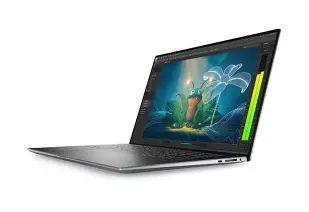
The Precision 5570 ships in understated packaging that places emphasis on the machine itself rather than marketing frills. Included in the box are the laptop, the power adapter for the chosen configuration, documentation, and basic recovery media instructions. The machine’s chassis follows Dell’s premium aesthetic: a slim, brushed-metal exterior with tight tolerances and a minimal logo. It feels weighty enough to convey durability but remains noticeably more portable than many traditional workstations.
Out of the box, the keyboard offers a firm, tactile travel that suits extended typing sessions; the haptic response aligns with what professionals expect from a work-oriented notebook. The trackpad is large and responsive, supporting precision gestures. The display — depending on the configuration — can be immediately striking: high-resolution panels with accurate color reproduction are available, which benefits color-critical workflows such as photo editing and grading.
Detailed Product Review and Analysis
Design and Build Quality
The Precision 5570 adopts a premium aluminum construction with an emphasis on thinness. This design reduces bulk while attempting to preserve the cooling capacity needed for professional GPUs and high-power CPUs. The hinge feels robust, allowing the lid to open with a single hand and holding the screen steady under normal desk conditions. Ports are concentrated along the sides with an expectation that users will rely on Thunderbolt docks for expanded connectivity in stationary setups.
Display
Display options for the Precision 5570 typically include high-resolution, high-contrast panels suitable for professional work. Buyers who prioritize detailed imaging work will want the higher-resolution, factory-calibrated panels where available. The combination of high pixel density, good brightness range, and accurate color coverage makes the laptop suitable for creative tasks and CAD visualization. For users who frequently work outdoors or under bright office lighting, checking the display’s peak brightness and anti-reflective coating is advised because configurations vary.
Performance
The Precision 5570 is offered with workstation-class processors and professional GPUs tailored for compute-heavy workloads. Typical configurations pair Intel H-series or Xeon-class CPUs with NVIDIA’s mobile professional GPUs. This combination is optimized for multithreaded compute, rendering, simulation, and model training tasks that benefit from GPU acceleration and robust single-threaded performance.
In short bursts and single-session workloads — compiling code, editing a large photo, running a CAD operation — the machine performs swiftly. Under sustained heavy loads (long renders or extended simulation runs), the thin chassis can push thermal designs close to their limits, and users may observe ramping fan noise or thermal throttling depending on configuration and ambient temperature. Those who run continuous, intensive jobs might prefer a larger workstation or an external GPU solution for extended headroom.
Thermals and Acoustics
Thermal performance is a common trade-off in thin mobile workstations. The Precision 5570 strikes a compromise: it dissipates heat effectively for short to moderate workloads, but sustained maximum loading will drive fans higher and temperatures up. In many professional scenarios where burst performance is more typical than 12-hour continuous rendering, this balance will be acceptable. Buyers who need consistent peak performance for long periods should validate thermal benchmarks relevant to their software of choice.
Ports and Expandability
Connectivity focuses on modern high-speed interfaces, including multiple Thunderbolt 4/USB-C ports for displays and docking, and dedicated audio output. The precise number and arrangement can differ by configuration. The design trend is clear: the Precision 5570 expects users to leverage docking stations in desktop environments while remaining mobile with a compact set of on-device ports during travel.
Discover deals on Electronics — updated daily.
See Deals →Serviceability and upgrade options are configuration-dependent. Many professional buyers care about being able to expand RAM and storage; some configurations allow easy SSD replacement and RAM upgrades, while others may have more soldered components. It is recommended to confirm factory options and local service terms at the point of purchase if upgradability is important.
Battery Life
Battery performance on mobile workstations traditionally lags behind ultra-efficient consumer laptops because of powerful CPUs and GPUs. The Precision 5570 is no exception: mixed-use scenarios (web browsing, document editing, light media) will see respectable battery life, but GPU-accelerated workloads or prolonged video playback will reduce endurance noticeably. Users who expect full-day unplugged workstation-level performance should plan for battery-conserving settings or carry the power adapter.
Keyboard, Trackpad, and Webcam
The keyboard favors reliability over novelty, with a layout that supports numeric entry, programmable keys in some setups, and practical key travel for long sessions. The trackpad is precise and ample for gesture-driven navigation. The integrated webcam and microphones meet conferencing standards for professional meetings, though buyers with strict low-light or high-fidelity video needs should verify the specific camera specification of their chosen configuration.
Software, Drivers, and ISV Certification
One of the Precision line’s appeals is ISV (Independent Software Vendor) certification for applications like Autodesk, SolidWorks, Adobe Creative Cloud, and certain engineering suites. These certifications indicate that vendors have validated hardware and drivers for stability and performance with their software. For professionals whose workflows depend on certified reliability, verifying ISV status for the intended applications is a practical purchasing consideration.
Real-World Use Cases
The Precision 5570 is tailored for professionals who need a compact but capable workstation. Typical real-world use cases include:
- CAD and mechanical design — responsive modeling, assemblies, and simulations on the go.
- 3D visualization and animation — viewport performance and GPU-accelerated rendering for previews and iterative work.
- Software development and data analysis — parallel compilation, container-based workflows, and model prototyping that benefit from multi-core CPUs.
- Content creation — photo and video editing where color accuracy and high-resolution displays are valuable.
- Field engineering — professionals who visit client sites and need workstation-class compute without transporting a heavy chassis.
Buyers in these scenarios prioritize sustained reliability, validated drivers, and service options that minimize downtime.
Pros & Cons
- Pros:
- Premium, compact chassis that balances portability and performance.
- Workstation-grade CPU and GPU options suitable for professional applications.
- High-quality display options with strong color fidelity for creative work.
- ISV certifications for software reliability in many professional workflows.
- Robust keyboard and precision trackpad for extended productivity.
- Cons:
- Thin chassis can limit sustained thermal headroom under extended heavy loads.
- Battery life is moderate when running professional, GPU-accelerated tasks.
- Configuration-dependent upgradability — some models have limited user-accessible RAM.
- Port selection emphasizes Thunderbolt/docking, which may require additional adapters for legacy peripherals.
Comparison: Precision 5570 vs. Similar Machines
| Model | Typical Target User | Strengths | Relative Weaknesses |
|---|---|---|---|
| Precision 5570 (2022) | Professionals needing a portable workstation | Workstation GPUs, premium display options, ISV certification | Thermal limits in a thin chassis, mixed battery life |
| Apple MacBook Pro 14/16 (M1 Pro/Max) | Creative professionals in Apple ecosystem | Exceptional power efficiency, strong single-thread & media engine | Limited support for some native Windows-only professional apps |
| Lenovo ThinkPad P1 (Gen 5) | Engineers seeking durability and keyboard comfort | Strong build, workstation options, great keyboard | Design may be less compact; some configurations heavier |
| Dell XPS 15 (Consumer) | Power users and creators without ISV needs | Premium design, excellent displays, better battery in consumer workloads | Lacks workstation GPUs and formal ISV certifications |
Buying Guide: Choosing the Right Precision 5570 Configuration
Professionals selecting among Precision 5570 configurations should prioritize based on workload demands, portability needs, and long-term support expectations. The following checklist helps align choices with real-world use.
1. Define Primary Workloads
Start by listing the primary applications and their bottlenecks. CPU-bound tasks (compilation, simulation) benefit from higher-core-count CPUs, while GPU-accelerated workflows (rendering, large-model training, GPU compute) require professional-grade GPUs. Confirm that target applications are ISV-certified on the chosen configuration.
2. Choose RAM with Growth in Mind
Memory impacts multitasking and large-project handling. For CAD assemblies, large datasets, or heavy multitasking, opt for higher RAM configurations. Verify whether RAM is user-upgradable or soldered; if upgrades are possible, starting with a moderate amount and planning for a future upgrade may save cost upfront.
3. Storage: Speed and Capacity
Professional workloads often require fast storage for large files and scratch space. Select PCIe NVMe SSDs with adequate capacity for projects and consider a larger drive or external high-speed storage for archiving. If the configuration allows dual drives, using a second slot for scratch or backup is beneficial.
Discover deals on Electronics — updated daily.
Shop Amazon →4. Display Choice Based on Tasks
Choose a display that matches color-critical work and preferred workflow. Higher-resolution panels improve detail for design and editing, while high-brightness panels assist when working under varied lighting. Consider touch or non-touch options based on personal workflow preferences.
5. Ports and Docking Strategy
Confirm that the laptop’s ports meet travel-day needs and desk setup requirements. Many users rely on Thunderbolt docking to connect multiple external displays and peripherals in a single cable. If frequently connecting legacy devices, factor in adapter availability or dedicated port requirements.
6. Cooling and Sustained Performance Expectations
If daily workflows include prolonged rendering or continuous simulation, evaluate thermal performance and consider external cooling strategies or larger workstation alternatives. For mixed workloads and portability, the Precision 5570’s balance will often be preferable.
7. Warranty, Support, and Service Options
Professional uptime matters. Consider extended warranties, on-site service plans, and accidental damage protection if the laptop will be used in the field. Confirm turnaround options for repairs, especially for teams that cannot tolerate extended downtime.
8. Budget and Total Cost of Ownership
Mobile workstations carry premium pricing for validated performance and support. Factor in the cost of docks, external displays, adapters, and maintenance plans to estimate the total cost of ownership over the device’s expected service life.
Conclusion
The Precision 5570 2022 represents a compelling option for professionals who need a portable, well-built mobile workstation capable of tackling demanding tasks. Its strengths are clear: workstation-grade components in a refined chassis, strong display options, and the reliability advantages afforded by ISV partnerships. The trade-offs are equally honest — thinness constrains sustained thermal performance and battery endurance when pushed to extremes.
For buyers whose daily workflows involve a mix of desktop and mobile work — occasional on-site modeling, frequent client presentations, or travel between offices — the Precision 5570 strikes a practical balance. Those requiring non-stop peak throughput for many hours straight should evaluate larger, thermally more capable workstations or hybrid approaches that offload heavy renders to dedicated desktops or cloud resources.
Ultimately, the Precision 5570 is a modern interpretation of the mobile workstation: designed to keep professionals productive without forcing them to compromise on portability. Prospective purchasers are advised to match configuration choices to their most demanding tasks, verify upgradability where it matters, and select support plans that protect their workflow continuity.