Is the Galaxy Book5 Pro 360 2024 Still Good in 2026? Long-Term Review
I've been using the Galaxy Book5 Pro 360 (2024) as my primary laptop for about 18 months now, and since it's a convertible I rely on it for everything from long writing sessions and photo editing to the occasional video call and sketching with the S Pen. In this long-term review I want to share what held up, what disappointed me, and whether this machine still makes sense in 2026 for people who value a mix of portability, a touchscreen experience, and capable performance.
Why I bought it (my configuration and expectations)
I chose the 16-inch version with an Intel Core i7, 16GB of RAM, and a 512GB SSD because I wanted a single machine that could replace my tablet + laptop setup. I was specifically attracted to the convertible design, the Samsung display quality, and the bundled S Pen support. I expected decent performance for everyday productivity and light creative work, a comfortable keyboard, and battery life that would get me through a workday.
First impressions that lasted
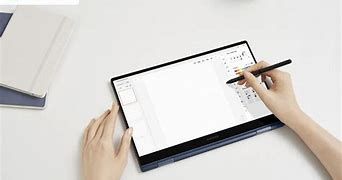
Out of the box the Galaxy Book5 Pro 360 felt polished. The chassis is thin but solid, and the hinge feels sturdy — over many open/close cycles it hasn't developed the wobble I've seen on cheaper convertibles. The keyboard layout was immediately comfortable for long typing sessions, and the large glass touchpad stayed responsive and precise. The S Pen experience was one of the main reasons I bought it: it felt natural for note-taking and light illustration, and the palm rejection kept me from accidentally marking up pages while writing.
Display, color and touch experience
The touchscreen remains one of my favorite parts of this laptop. Colors are rich, contrast is strong, and the glass feels smooth for pen and finger input. For photographers and designers who want a portable creative laptop, the display still holds its own for color-critical work after I calibrated it with a hardware calibrator. That said, the very brightest outdoor sunlight visibility is still limited — I found that I needed to seek shade or crank brightness to maximum in direct sun.
Over time I noticed no color shift or obvious uniformity issues on my unit. The touch layer has retained its responsiveness and the S Pen latency hasn't worsened noticeably.
Performance and daily usage (productivity, creativity, and light gaming)
For everyday productivity — browser tabs, Slack, Google Docs, the occasional VM, and multiple productivity apps — the Book5 Pro 360 delivers smooth, consistent performance. My unit with 16GB of RAM handled dozens of tabs and background apps without constant memory pressure. In light creative tasks (photoshop edits, Lightroom catalogs, vector work) it was competent. Export times are longer than dedicated desktop workstations, but acceptable for on-the-go editing.
Under sustained heavy loads (long 4K encode or several CPU+GPU-heavy processes running), the chassis gets warm on the underside and the fans ramp up. The fans are noticeable but not piercing; they do distract in quiet rooms during heavy work. More importantly, sustained heavy loads do trigger thermal limits and some CPU/GPU throttling, which is expected for a thin convertible. If you are planning to do full-time video rendering or intensive 3D work, this isn't meant to be a desktop replacement.
Battery life and long-term battery health
One of the biggest practical questions for me was battery life after extended use. When new the laptop comfortably hit my "all-day" needs: roughly 8–10 hours of mixed web browsing, document work, and occasional video. After about a year and a half of daily use, I've seen the practical capacity drop — my typical real-world usage now gives me around 6–7 hours when I leave brightness at comfortable levels and keep background syncs running.
I checked battery health with Windows' built-in report tools and a third-party battery monitor; the battery capacity on my unit sits around 82–86% of its original design capacity after 18 months, which matches reasonable expectations for daily use. If maximum longevity matters, I'd advise avoiding constant full discharges and to use the more conservative charging profile options Samsung provides.
Software, drivers, and updates
Samsung's bundled software (Samsung Settings, device utilities and the occasional preinstalled app) has been a mixed bag. The Settings app has useful toggles for performance modes, display modes and S Pen customization, and Samsung's software updates improved stability early on. I did experience minor driver-related hiccups after a Windows feature update once — a quick driver reinstall fixed the camera and audio quirk — but nothing major since the first year.
Looking for the best Electronics deals on Amazon?
See Deals →Windows itself remains the control center, and I've not had any show-stopping software issues. I appreciated that Samsung continued releasing firmware and driver updates through the life of my device, which helped iron out standby and battery drain bugs in the first months.
Build quality, hinge and long-term durability
The aluminum chassis has held up well to daily transport in my backpack. I noticed only minor surface scuffs where keys rubbed during transit — nothing structural. The hinge remains tight and doesn't sag. The convertible mechanism shows no slack and the lid opens and converts cleanly to tent or tablet modes. If you're rough with your gear, I'd still recommend a sleeve, but for normal travel the durability has been satisfactory.
Keyboard, touchpad and S Pen in everyday life
The keyboard is one of the best I’ve used on a convertible. Key travel is comfortable, the backlight is even, and the layout is intuitive. I appreciated the quiet key action for coworking spaces. The large glass precision touchpad has stayed accurate and pleasant to use — multi-finger gestures are reliable.
The S Pen remains a highlight. I sketch, annotate PDFs, and take long-form handwritten notes with it. It never needed charging (my S Pen is passive) and the magnetized storage on the chassis is convenient. Palm rejection and tilt sensitivity have performed consistently; for speed note-taking and editing screenshots it's become part of my daily workflow.
Connectivity and ports
For ports, the Book5 Pro 360 leans toward a modern, thin-laptop balance: a couple of USB-C/Thunderbolt-capable ports for power and external display, a USB-A for legacy peripherals, and a microSD slot (on my configuration). That mix worked well for my setup: I can connect a single external monitor, a USB hub, or an external SSD easily. If you rely on many wired peripherals simultaneously, you’ll want either a dock or a hub.
Wi-Fi and Bluetooth connectivity have been stable; I haven't experienced chronic dropouts. Calls and microphones are adequate for meetings, and the laptop's webcam does a fine job in average indoor lighting — not studio quality, but better than many base Ultrabook webcams.
What I liked — specific things that stood out
- S Pen integration: I genuinely use the pen daily. It changed my workflow for quick annotations and sketches.
- Display quality: The touchscreen color and contrast have stayed consistent and make it pleasant for media and editing.
- Keyboard and touchpad: Comfortable for marathon typing sessions and precise cursor control.
- Convertible versatility: Tablet and tent modes are practically useful for presentations, reading, and sketching.
- Solid chassis and hinge: No wobble or looseness after heavy use, which matters for a convertible.
What bothered me — real, owner-level annoyances
- Thermals under heavy sustained load: The laptop throttles and fans get loud during long exports or heavy multitasking; it's fine for bursts but not for extended workstation-level tasks.
- Battery wear: Real-world capacity decreased to the mid-80% range after 18 months — not surprising, but noticeable compared to brand-new behavior.
- Port selection: Comfortable for travel but I wished for one more full-size USB-A and a built-in HDMI on occasion — I now use a small dock.
- Bloatware: A few preinstalled apps I never used; I removed them, but it's an extra step early on.
- Outdoor brightness: In very bright sun I still need to hunt for shade.
Quick pros & cons summary
- Pros: Excellent pen integration, great display, comfortable keyboard, convertible versatility, solid build.
- Cons: Thermal limits for sustained heavy work, modest battery degradation after long use, conservative port selection.
Comparison: Galaxy Book5 Pro 360 (my unit) vs common alternatives
| Feature | Galaxy Book5 Pro 360 (2024) — my unit | Alternatives (what I compared when shopping) |
|---|---|---|
| Form factor | Convertible 2-in-1 with S Pen, lightweight aluminum chassis | Traditional clamshells (higher thermal headroom) and detachable tablets (lighter, less laptop-like) |
| Display | High-contrast touchscreen, very good color out of box | MacBook-class LCDs have excellent color/brightness; some Windows OLEDs are brighter but may have burn-in concerns |
| Performance | Strong for productivity and light creative work; throttles under sustained heavy loads | Thinner clamshell laptops can be similar; thicker power-focused laptops outperform on sustained CPU/GPU tasks |
| Battery life (real world) | 8–10 hours new; ~6–7 hours after extended use in my mixed workload | Some modern ARM-based laptops (M-series) still lead in battery longevity; high-performance Windows laptops vary widely |
| Ports | Mostly USB-C/Thunderbolt, one USB-A, microSD (my unit) | Full port sets on thicker laptops; ultraportables often need hubs |
| Sustainability & updates | Regular firmware and driver updates from Samsung during my ownership | Apple offers long OS support; Windows OEM update cadence varies by vendor |
Who should buy the Galaxy Book5 Pro 360 in 2026?
In my experience, this laptop still makes sense in 2026 for several types of buyers:
- Digital note-takers and light creatives: If you use a stylus for notes, annotations, or light sketching and want a comfortable typing experience in the same device, this laptop is excellent.
- Frequent travelers and hybrid workers: The convertible design and good display make it a versatile travel companion for meetings, presentations, and inconsistent workspace setups.
- People who want a Windows convertible: If your workflow depends on Windows apps but you still want a tablet-like interaction occasionally, the Book5 Pro 360 offers a solid balance.
It might not be the right fit if you need a sustained high-performance machine for full-time rendering, heavy 3D workflows, or if you need the absolute longest battery life possible (some ARM-based laptops and newer M-series Macs still excel there). If you need a wide port selection without a dock, look elsewhere or budget for a dock.
Buying guide — tips from my long-term ownership
Choose the configuration based on how long you keep laptops
If you plan to keep a laptop for several years, prioritize higher RAM and storage because modern workflows and browser memory demands increase with time. My 16GB configuration has been adequate for 18 months, but if you routinely run many heavy apps or VMs, spring for 32GB if available.
Find top-rated Electronics products at great prices.
Browse Now →Think about storage and backups
512GB was fine for my photo library supplemented with an external SSD, but if you work with large media files it pays to get a larger internal drive or budget for a fast external NVMe enclosure. I recommend setting up a disciplined backup routine — I use a two-drive redundancy system (local + cloud) to avoid unpleasant surprises.
Manage battery health proactively
Use the battery health or conservative charging modes Samsung provides, avoid keeping the laptop at 100% plugged in all the time, and try to avoid prolonged full discharges. These small habits slowed capacity loss on my unit.
Budget for a hub if you need more ports
In daily life I found a compact USB-C hub indispensable; it adds HDMI, extra USB-A ports and sometimes gigabit Ethernet. If you frequently present to legacy projectors or need multi-monitor setups, a dock is worth the investment.
Test the S Pen early
If pen input matters to you, test it in stores if possible and make sure the tilt/pressure feel and palm rejection suit your drawing/writing style. On my unit the S Pen has been reliable and highly useful.
Final thoughts and conclusion
After 18 months of daily use, the Galaxy Book5 Pro 360 (2024) still feels like a thoughtful, capable, and versatile machine — especially for people who really value a pen-enabled convertible with a great display and a comfortable keyboard. My day-to-day experience has been positive: the S Pen is more than a gimmick, the convertible design is genuinely useful, and the overall hardware quality remains strong.
That said, it isn't flawless. Thermal limits under sustained heavy loads and the expected battery capacity drop over time are the main practical trade-offs. If you need a portable creative workstation that will run long CPU/GPU jobs all day, you'd be better served by a thicker workstation-class laptop. If pen integration, portability, and a good display matter most, the Book5 Pro 360 continues to be a compelling option in 2026 — provided you accept the compromises that come with a thin convertible.
In my experience, the Galaxy Book5 Pro 360 has stood up to daily use better than I expected, and I still reach for it first when I'm traveling, sketching, or writing. If those are the things you prioritize, it's still a very good machine two years after its release.